Mexico’s biometric CURP: What the new digital identity ecosystem means for organisations

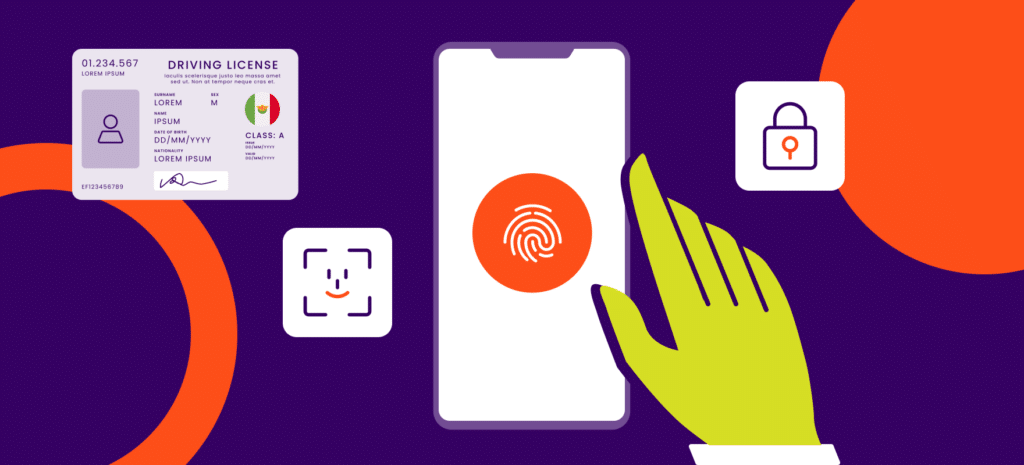
An identity document can prove who you are. An identity ecosystem can change how an economy works.
Mexico is making that shift now.
Following reforms published in July 2025 – introduced primarily to strengthen public security and the search for missing persons – Mexico is moving from legislation into the implementation of a state-backed digital identity ecosystem built around biometric CURP, Llave MX and the Plataforma Única de Identidad. Together, these initiatives are creating a stronger foundation for identifying and authenticating people across public services – and, under a phased rollout that began in February 2026, private organisations are increasingly required to accept the biometric CURP and Llave MX too.
The significance goes beyond a new form of identification. Mexico is building national infrastructure that can change how trust operates across its digital economy.
From an identity number to identity infrastructure
The CURP is evolving from an 18-character population identifier into a national identity credential supported by biometric data and available in physical and digital formats.
Llave MX provides a common access mechanism linked to CURP, reducing the need for people to create separate accounts for different government services. The Plataforma Única de Identidad adds the infrastructure required for identity consultation, validation and interoperability.
The result is a fundamental shift: from identity information held across separate public systems towards a common, government-backed foundation for identity validation.
For individuals, this creates the potential for simpler, more consistent identity across both public sector institutions and a growing range of private and regulated services, from banking to healthcare. For organisations, accepting the biometric CURP as valid identification is increasingly a legal requirement – and it also offers a government-backed reference point they can build on, alongside existing digital customer onboarding, identity verification and authentication processes.
This is an operating model change
The practical implications start with processes, not technology.
Organisations need to examine how identity is accepted and validated, how customer journeys interact with official identity sources, and how sensitive data is governed and protected. They also need to prepare their systems for interoperability as technical and sector-specific requirements develop.
For banks and payment providers, this goes beyond updating a KYC workflow. Identity established at onboarding needs to remain trustworthy throughout the user journey.
Every subsequent interaction creates new evidence. Signals from the customer, their device, the application and channel they are using, their behaviour, the session and the transaction itself can be evaluated together to determine whether trust still holds. This allows low-risk interactions to continue without interruption, stronger checks to be introduced when the context changes, and suspicious activity to be challenged or blocked.
Passwordless authentication, app and device security and fraud prevention technologies all contribute to this continuous assurance model, forming part of the signal set and security gates that enable organisations to maintain trust across login, account recovery, customer support and high-risk transactions – without repeatedly asking legitimate customers to prove who they are.
The wider fraud environment reinforces the importance of trusted digital interactions. In the first quarter of 2026, CONDUSEF reported around 1.5 million complaints about possible fraud – roughly three in four complaints across the financial system – underlining the scale of the trust challenge facing financial institutions and their customers.
Failure to adapt therefore carries risks beyond direct compliance and operational disruption. Weak identity processes leave space for impersonation, account takeover and fraudulent access. At scale, those weaknesses damage consumer confidence and create costs that spread across organisations, individuals and society.
Mexico is part of a global move towards reusable digital identity
Mexico is taking its own route, but the direction is international.
The EU Digital Identity Wallet framework is creating an interoperable model for public and private services, with an emphasis on user control. The UK is consolidating access to public services through GOV.UK One Login, while Brazil’s gov.br infrastructure gives citizens a common route into thousands of government services.
Different architectures. Different regulatory environments. The same strategic question: how do we turn trusted identity into simpler, safer digital interactions?
Government identity is the foundation. Trust must continue beyond it.
A state-backed identity credential creates a powerful starting point. The private sector’s role is not to replace or duplicate that identity. It is to use trusted, interoperable validation and add the assurance required for different services, channels and levels of risk.
A customer may establish their identity through national infrastructure, but organisations still need to know that the person returning to an account, recovering access or approving a high-risk transaction is the legitimate customer.
By combining official identity sources with secure authentication, device intelligence and contextual risk signals, trust can continue across mobile apps, websites, contact centres and branches.
There is also an opportunity to minimise unnecessary data exposure. Organisations do not always need an entire identity record. In many interactions, they only need proof of a specific fact: that someone meets an age requirement, is an existing verified customer or is authorised to complete a transaction.
This is where privacy-first digital identity and identity orchestration become important: complementing trusted national infrastructure with continuous assurance, contextual fraud controls and privacy-preserving checks.
Mexico’s digital identity transformation is bigger than a compliance exercise.
Done well, it means less friction for individuals. Stronger defences for organisations. And greater confidence in the digital economy.
That is when identity infrastructure starts improving more than processes. It starts improving lives.

Hola! I’m Gonzalo Alonso; over the last 30 years I’ve led at Google and Microsoft, as well as building and exiting my own tech startups. I’m now proud to be the Chief Executive Officer at Ditto.
Enjoyed this article? Share it.